
Isle of Staffa & Inner Hebrides
Fingal's Cave
About
Fingal's Cave
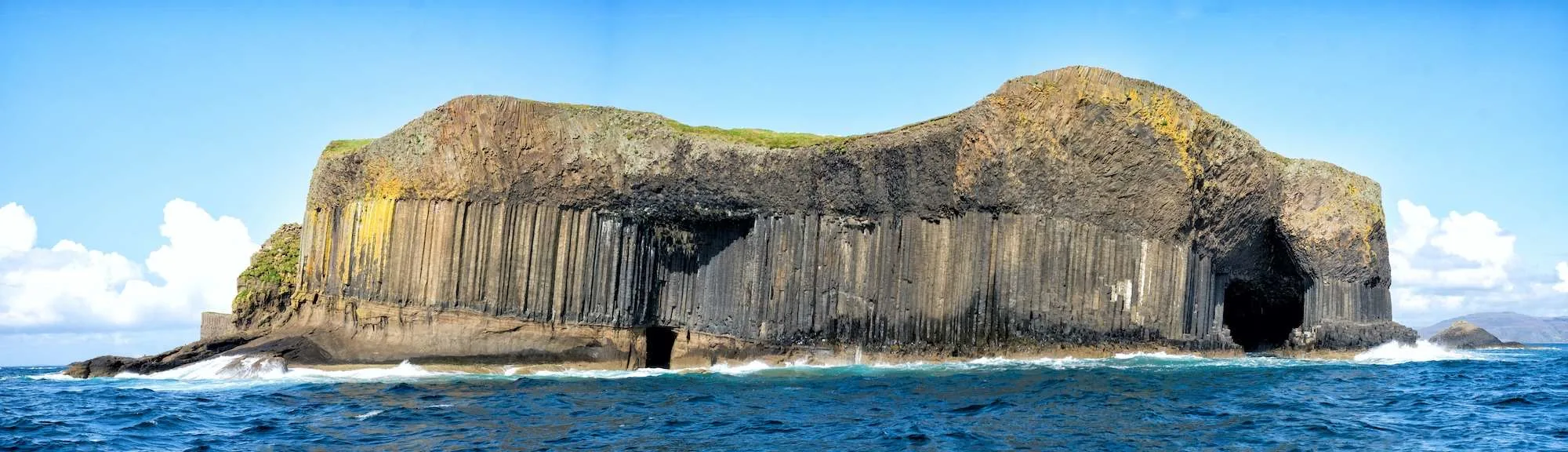
Experience the unmatched wonder of Fingal’s Cave on the mystical Isle of Staffa. Its extraordinary hexagonal columns of basalt, shaped by the relentless Atlantic and carved by ancient volcanic forces, form a natural cathedral sound that is renowned for having served as the inspiration for Mendelssohn's "Hebrides Overture." This geological masterpiece is more than simply a cave, it has a deep link to Scotland’s wild beauty and rich history. It is also said to be a part of the legendary giant Finn MacCool’s bridge to Ireland.
Things to see & do

FAQs
Fingal's Cave on the island of Staffa is known for its hexagonal basalt columns, formed by the same volcanic eruption 60 million years ago that shaped the Giant's Causeway in Northern Ireland. Its acoustics and eerie atmosphere inspired Felix Mendelssohn's Hebrides Overture in 1830.
You can only reach Fingal's Cave by boat, usually on a day trip from Oban, Mull (Fionnphort or Tobermory) or Iona. Trips run roughly April to October, weather permitting. From the landing point it's a short walk along the basalt columns to the cave entrance.
The cave stands about 20 metres tall and runs some 80 metres deep. It takes its name from the Gaelic hero Fionn mac Cumhaill (Fingal) and lies within a National Nature Reserve managed by the National Trust for Scotland.
It is. There's nowhere else quite like it in Britain. The boat trip from Mull or Iona takes about 45 minutes and is a highlight of any Hebrides visit. Check the weather before booking, as sailings can be cancelled in rough seas.
Book a private tour and explore
Fingal's Cave
with a local expert guide.

Tours visiting this attraction
Start Planning Your Scotland Adventure
Please contact us if you’d like to customise an existing tour or if you want to create a bespoke tour specifically for you and your group.
Our expert team of advisors are here to help.
.avif)