
Glasgow
Finnieston Crane
About
Finnieston Crane
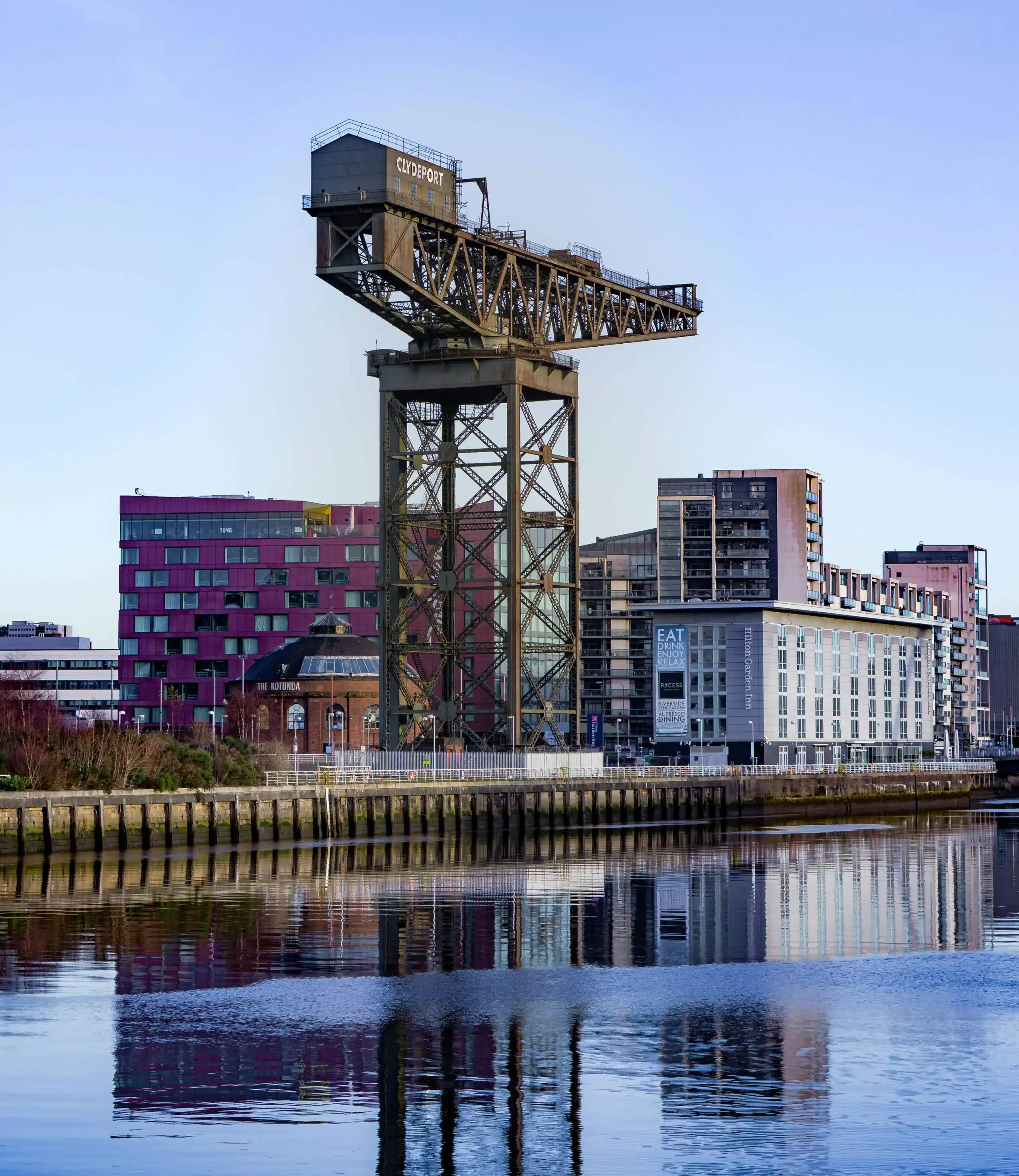
As you leave Glasgow’s city centre, you will notice the dramatic silhouette of the Finnieston Crane against the River Clyde. Often known as the Stobcross Crane, the disused giant cantilever crane is a lasting symbol of Glasgow’s engineering and ship building past. Although it was never used to guild ships, it played a pivotal role in the industry by lifting heavy goods, mainly steam locomotives, into ships for export all around the world. Today, the surrounding Finnieston neighbourhood showcases ‘Modern Glasgow’, with historic venues such as the SECC and The Hydro, both central hubs for music, arts and culture, standing beside this iconic landmark of the city’s industrial heritage. At Hopscotch Travel, our Glasgow City day tour incorporates the Finnieston Crane.
Things to see & do

FAQs
The Finnieston Crane, also called the Stobcross Crane, was last used commercially in 1990. Built in 1932, its main job was loading heavy equipment, locomotives included, onto ships on the River Clyde.
It can lift 175 tonnes. The crane was built to handle very large loads such as steam locomotives and power station parts bound for export.
You can't go up it. The Category A listed crane is preserved as a monument to Glasgow's shipbuilding past and isn't open to the public, but it's a striking landmark from the riverside and the nearby SSE Hydro.
The crane stands on the north bank of the Clyde at Stobcross Quay, next to the SSE Hydro and near the Riverside Museum, about 1.5 miles west of Glasgow city centre.
Book a private tour and explore
Finnieston Crane
with a local expert guide.
Tours visiting this attraction



Start Planning Your Scotland Adventure
Please contact us if you’d like to customise an existing tour or if you want to create a bespoke tour specifically for you and your group.
Our expert team of advisors are here to help.
.avif)