Scottish Borders
Melrose Abbey
About
Melrose Abbey
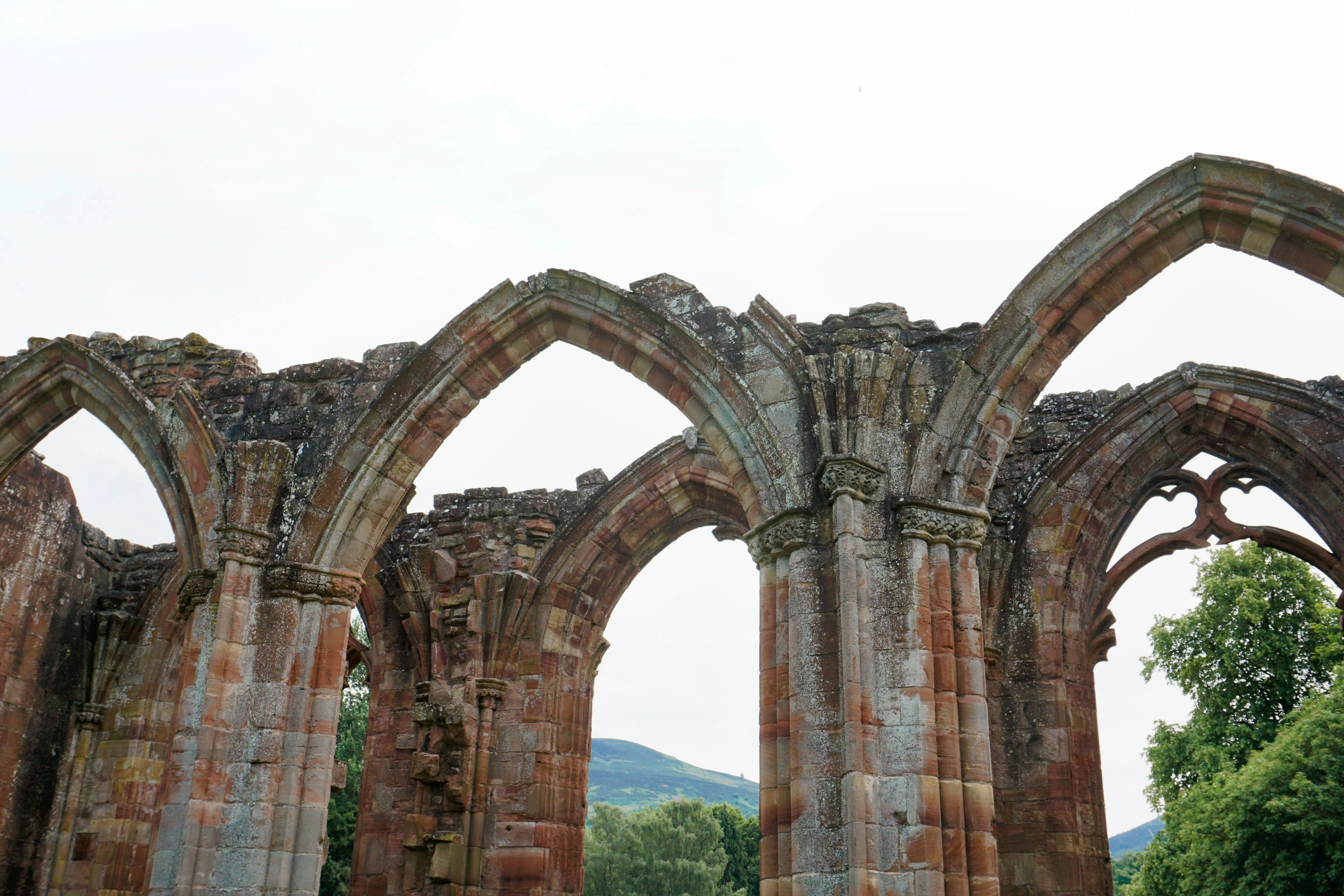
Nestled on the banks of the River Tweed, Melrose Abbey was founded by King David I in 1136 for the Cistercian order. Over the centuries, the abbey has experienced turmoil and renewal, but today it stands as a striking Gothic ruin. Intricate stonework, tall buttresses, and ornate gargoyles rise against the Eildon Hills, giving visitors a window into Scotland’s history.Melrose Abbey is an important part of Scottish history. Beneath its high altar rests the heart of Robert the Bruce, buried here after his death in 1329. The abbey is also the burial place for ancestors of Sir Walter Scott, who lived nearby at Abbotsford and wrote about Melrose and the Borders. Today, the abbey sits in one of Scotland’s most scenic and tranquil areas, open to all who want to visit.
Things to see & do

FAQs
Two things stand out: its Gothic architecture, among the finest carved stonework of any medieval building in Scotland, and its role as the burial place of Robert the Bruce's heart. After Bruce died in 1329, his heart was embalmed and carried on crusade towards Granada in Spain by Sir James Douglas, then returned to Scotland and interred at Melrose as the king had asked. A lead casket thought to hold the heart was found during excavations in 1921 and again in 1996, and is now marked beneath the high altar.
It's one of the great medieval ruins of Britain, and still surprisingly under-visited for its quality. The carved stonework is remarkable even in ruin, right down to the famous pig playing the bagpipes on one of the roof bosses. The setting on the River Tweed with the Eildon Hills behind is lovely, and the town of Melrose, with its good independent shops and restaurants, rounds out a full and rewarding day.
Abbotsford House, the remarkable home Sir Walter Scott built and lived in from 1817 until his death in 1832, is about 3 miles west of Melrose on the banks of the Tweed. Scott was a passionate champion of the abbey and wrote about it in his narrative poem 'The Lay of the Last Minstrel' (1805), which brought it to wide attention. The two make natural companions on a Scottish Borders day tour.
Melrose Abbey is around 38 miles south of Edinburgh, roughly 50 minutes by car on the A7 or A68 through the Borders. It sits in the heart of the Scottish Borders between Galashiels and Jedburgh, and combines easily with Dryburgh Abbey, Jedburgh Abbey and Abbotsford House on a full Borders day tour.
Book a private tour and explore
Melrose Abbey
with a local expert guide.

Tours visiting this attraction
Start Planning Your Scotland Adventure
Please contact us if you’d like to customise an existing tour or if you want to create a bespoke tour specifically for you and your group.
Our expert team of advisors are here to help.
.avif)