Isle of Bute
Rothesay Castle
About
Rothesay Castle
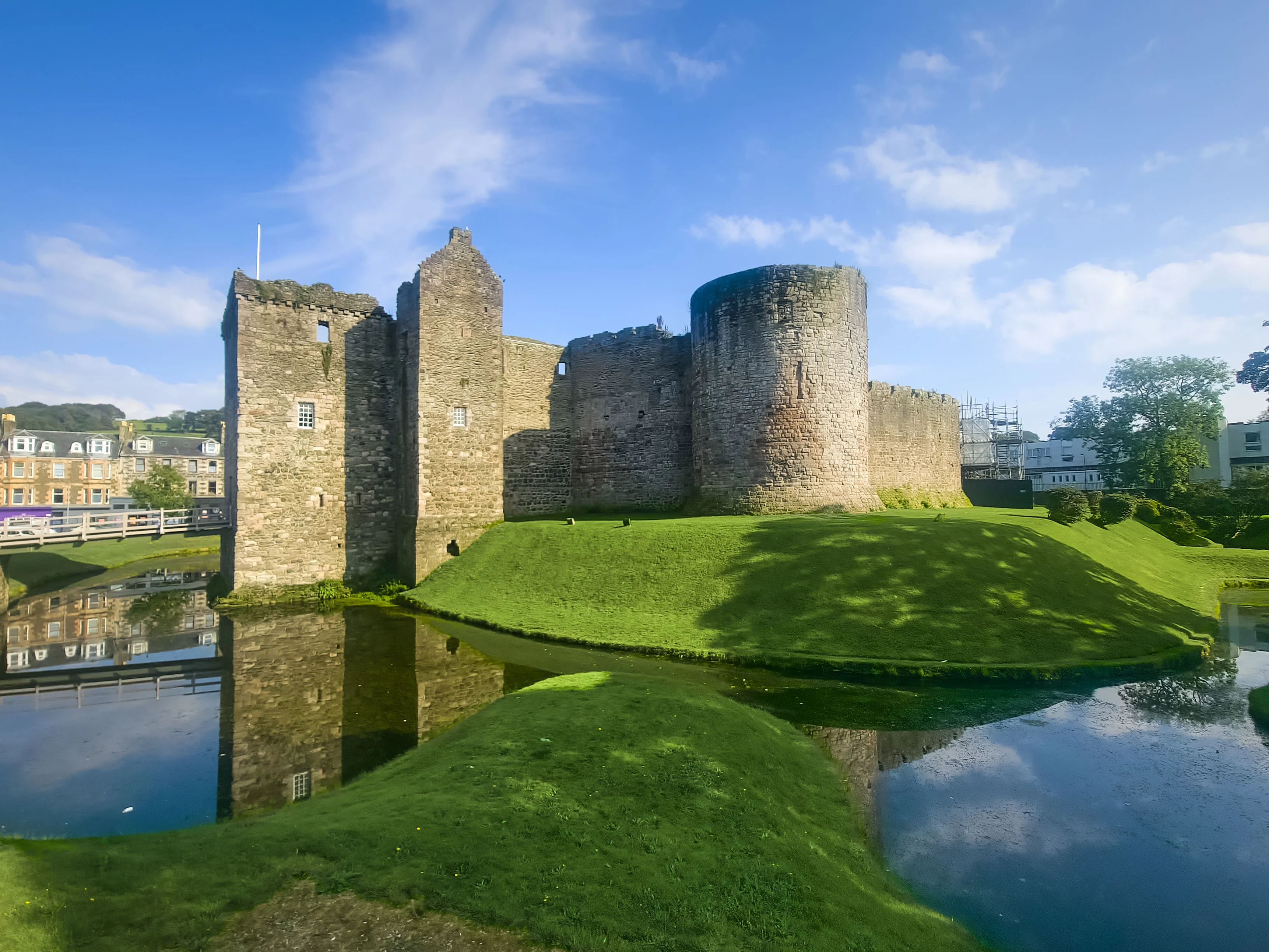
Rothesay Castle is one of the most remarkable and unusual medieval castles in Scotland — a 13th-century fortress with a circular curtain wall plan found nowhere else in the British Isles, sitting in the heart of Rothesay town on the Isle of Bute. The castle was a key stronghold of the early Stewart kings, and the title Duke of Rothesay — bestowed on the heir to the Scottish throne since 1398 — remains the Scottish title of the current Prince of Wales. Despite its modest size, Rothesay Castle has a dramatic history. It was captured by Norwegian Vikings in 1230 — their axes still visible in the damaged stonework — before being retaken by the Scots. A magnificent 16th-century gatehouse tower was added later, giving the castle its distinctive entrance. Today it is managed by Historic Environment Scotland and is one of the most evocative and accessible castle visits on Scotland's west coast.
Things to see & do

FAQs
Rothesay Castle is unique in the British Isles for its circular curtain wall. Most medieval castles are rectangular or shaped to their site, but this one was built as a near-perfect circle. That plan, with its round towers and water-filled moat, makes it one of Scotland's most distinctive castles, and its early 13th-century stonework makes it one of the oldest surviving stone castles in the country.
The Duke of Rothesay is the Scottish title held automatically by the heir apparent to the British throne, the equivalent of the Prince of Wales in England. It has been conferred since 1398, when it was first granted to David Stewart, the eldest son of Robert III. King Charles III held it as heir, and it now belongs to Prince William, giving the castle a lasting royal link.
Rothesay Castle is looked after by Historic Environment Scotland, with a small admission fee of around £6 for adults; HES members go free. It stands right in the centre of Rothesay, a few minutes' walk from the ferry pier, which makes it an easy start or finish to a day on Bute.
Norwegian Vikings attacked Rothesay Castle in 1230, reportedly hacking through the walls with axes rather than climbing them; the damage is still visible in the stonework today. The Scots retook it soon after. It was besieged again by the English during the Wars of Independence and changed hands several times before becoming a favoured home of the early Stewart kings.
Book a private tour and explore
Rothesay Castle
with a local expert guide.



Start Planning Your Scotland Adventure
Please contact us if you’d like to customise an existing tour or if you want to create a bespoke tour specifically for you and your group.
Our expert team of advisors are here to help.
.avif)